Wednesday, September 30, 2020

Let's get physical! Tech hardware & the M-learning framework

Over the past few months, I have spent lots of time thinking about software and technology applications.  How do we use Google Meet or Zoom to lead a class?  Is Flipgrid or Marco Polo better for sharing quick videos among class members?  What word cloud app will integrate seamlessly with my presentation?

This week, however, to quote the irrepressible Olivia Newton John, I say let’s get physical!


I confess that I don’t spend much time thinking about hardware.  In part, this is because most of our hardware – like our laptops and our Boxlight interactive whiteboards – is selected for us by district-level technology staff and almost magically (or, uh, after many calls to tech support) arrives in our classroom and works as planned.  In part, this is because, unlike many library media specialists, physical technology is not in my wheelhouse but in that of my Instructional Technology Specialist partner, Ms. Powe.  The makerspace, which is where a lot of physical tech seems to enter school libraries, is her domain, not mine.

Nonetheless, one of my classes has me thinking about the role of hardware this week.  Beyond the laptop, interactive whiteboard, and, frankly, my cellphone, what hardware could I imagine bringing into the library?  And, if I were to consider integrating some hardware of my choice into my library, what would best support students and teachers? 

_______________________________________________

Lucy Santos Green – who happens to be the professor for my class – reminds us in her 2014 article for Knowledge Quest that technology integration is a key role for library media specialists and that “becoming effective technology leaders involves shifting the focus of our efforts from promoting technology tools and usage to supporting teachers in designing technology-enabled experiences” (p. 42).  Whether the issue is hardware or software, we need to be able to evaluate and select tools that enhance a student-centered pedagogy.

There are a few proposals for evaluating technology for this purpose:

  • SAMR, the validity of which Green justifiably calls into question (2014)
  • The R.A.T. Model based upon research by Joan Hughes (2020)
  • The Florida Center for Instructional Technology’s (2019) Technology Integration Matrix
  • Kearney, Schuck, Burden, and Aubusson’s (2012) M-learning framework

Of these, I find Kearney, et al.’s (2012) framework to be most instructive due to its consideration of three specific features of student-based learning over time and space.  This framework encourages technology integration leaders to ask three key questions:

1.       Does the tool give the learner control?  (Personalization)

2.       Does the tool provide “real world relevance and personal meaning to the learner” (p. 9)? (Authenticity)

3.       Does the tool promote sense-making through dialog? (Collaboration)

______________________________________________

So, to which hardware will I apply this lens?  Being in the library and being a fan of books, my mind immediately goes to eReaders.  Anyone else have a couple of these laying around?

Not just me, right?  It seems eReaders were all the rage a few years ago.  Not only did I go through a couple, but in the first half of the decade now ending, a number of bloggers were also looking at eReaders and their usefulness in the classroom:

Jenaca Fredheim even created a Wiki on their use, and the journal TechTrends published an article.  But not long after this, the excitement over eReaders died down, thanks, I believe, to the introduction of the Kindle app that can be used on any device and the explosive ubiquity of multi-purpose tablets and phones-used-as-mini-tablets.

My question becomes:  are eReaders obsolete or, under the M-learning framework, do they hold potential for our learners? 

-----

Before I get into the analysis, I’d like to mention cost.  Many early comments about eReaders noted cost (Hamilton, 2011; Jonker, 2012; Schugar, Smith, & Schugar, 2013; Watters, 2012), but dedicated eReaders are now fairly inexpensive, with the cost of a Kindle as low as $90 (Amazon.com, 2020).  Additionally, I am surely not the only person with unused e-readers gathering dust at home who may be interested in donating them to a school library.

----

Back to the M-learning framework! 

1. Personalization:

Schugar, Smith, and Schugar (2013) caution us to ask, “Will the e-reader allow access to content that is different or better suited to the task?” (p. 623), a question well-suited to the M-learning framework’s personalization element  I do think that eReaders have the potential to provide a fairly high level of learner control over task-specific content.  As Watters (2012) notes when discussing Kindle features that excite learners:  “Start with the built-in dictionary and then add highlighting, variable font sizes, text-to-speech, and note-taking capabilities. There’s also a ‘popular highlights’ feature, whereby readers can see the most frequently highlighted passages, and that’s been a great ‘conversation starter’—even among second graders, says Parker—to encourage literary criticism, of sorts” (para. 5).  Because eReaders are easily portable (and allow for the portability of far more books at one time than most of us want to carry around in print), they facilitate providing the “just enough, just-in-time, just-for me” sort of learning that Kearney, et al., discuss (2012, p. 9).  Jonker (2012), Hamilton (2011), and Watters (2012) all note the value of this type of personalized content in literature reading circles.  With costs of eReaders declining, I can envision a student – perhaps a student with limited library access or limited internet access – leaving school for the summer with a charger and an eReader stocked with a curated collection of books, and a librarian not worrying too much if the device doesn’t return.

2. Authenticity:

The M-learning framework asks us to consider whether technology centers learning in real-world practice and relevance for the learner.  eReaders, while they may appear to have been rendered outdated by multi-use tablets, do nonetheless provide the opportunity for “rich, contextual tasks” (Kearney, et al., 2012, p. 11) that have “real world relevance” (Kearney, et al., 2012, p. 10).  Certainly, reading on a device is a modern task in which many people engage in the “real world” outside of school.  As Union, Walker Union, and Green note, our students “have grown up in an era in which computers and digital technologies are ubiquitous in their vernacular speech and skill sets” (p. 71).  Having access to a range of curated textual content in a single, portable device can provide learners with the opportunity to practice real-world activities of research, reading, and content curation.

3. Collaboration

Under the M-learning framework, the collaboration aspect considers whether technology supports dialogue and the creation of content by the learner in a community of learners.  Does the technology encourage learners to engage in sense-making through conversation?  While using an eReader can be a solitary activity, it does promote the ability of learners to engage in community activities, such as the literature circles I note above.  With some eReaders, content could be shared among readers in different locations without having to mail printed copies of books.  It is less clear whether eReaders provide the sort of networked, learner-generated content creation that Kearney, et al. (2012), envision.

______________________________________________


Where does this analysis leave me? 

Let’s explore eReaders more!  Check out the ideas in the blogs I’ve linked, and let’s have a conversation about how we can expand our literacy practices in the library and the classroom together.


References

Amazon.com. (2020). Kindle. https://www.amazon.com/b/?node=6669702011&ref=ODS_v2_FS_KINDLE_category

Florida Center for Instructional Technology. (2019). The technology integration matrix. FCIT. https://fcit.usf.edu/matrix/matrix/

Fredheim, J. (2012, March 4). Using e-readers in the classroom. http://etec.ctlt.ubc.ca/510wiki/Using_E-Readers_in_the_Classroom

Green, L. S. (2014). Through the looking glass: Examining technology integration in school librarianship. Knowledge Quest, 43(1), 36-43.

Hamilton, B. J. (2011, August 11). Next steps in the eReader journey: The Nook Simple Touch. The Unquiet Librarian. https://theunquietlibrarian.com/2011/08/11/next-steps-in-the-ereader-journey-the-nook-simple-touch/

Hughes, J. E. (2020). Replacement, amplification, and transformation: The R. A. T. model. TechEdges. https://techedges.org/r-a-t-model/

Jonker, T. (2012, February 18). Lending e-readers in the school library (Part II: Planning). 100 Scope Notes, School Library Journal. http://100scopenotes.com/2012/02/18/lending-e-readers-in-the-school-library-part-ii-planning/

Kearney, M., Schuck, S., Burden, K., & Aubusson, P. (2012). Viewing mobile learning from a pedagogical perspective. Research in Learning Technology, 20. DOI:10.3402/rlt.v2010.14406

Newton-John, O. (2009, December 24). Physical (official video) [Video]. YouTube. https://youtu.be/vWz9VN40nCA 

Schugar, H., Smith, C., & Schugar, J. (n.d.). Teaching with interactive picture e-books in grades K-6. Reading Rockets. https://www.readingrockets.org/article/teaching-interactive-picture-e-books-grades-k-6

Schugar, H.R., Smith, C.A. & Schugar, J.T. (2013). Teaching with interactive picture e-books in grades K–6. The Reading Teacher, 66(8), 615-624. doi: 10.1002/trtr.1168

Union, C. D., Walker Union, L., & Green, T. (2015). The use of eReaders in the classroom and at home to help third-grade students improve their reading and English/language arts standardized test scores. TechTrends, 59(5), 71-81. DOI: 10.1007/s11528-015-0893-3

Watters, A. (2012, February 1). The truth about tablets: Educators are getting iPads and eReaders into students’ hands – but it’s not easy. The Digital Shift, School Library Journal. http://www.thedigitalshift.com/2012/02/ebooks/the-truth-about-tablets-educators-are-getting-ipads-and-ereaders-into-students-hands-but-its-not-easy/   


Wednesday, September 16, 2020

Technology overload? There's an app for that!

I only wish my space was this serene!

This is a message especially for my fellow members of the RamFam at David T. Howard Middle School.

If you’re like me, you may find all of the tech savviness demanded by online teaching and learning to be a little overwhelming! 

We’ve swapped face-to-face interactions for Google Meets and Zoom videoconferences... 

We’ve swapped checking email, texts, and voicemail periodically for checking email, texts, and voicemail AND Remind AND GroupMe constantly...

We’ve swapped managing Google Classrooms for … well, we’re still doing that pretty much the same but many of us have added Bitmjoi classrooms to our repertoires! 

And, if you’re like me, you’ve also got social media accounts to manage.*

 As your library media specialist, I want to encourage you to take a moment to take a breath.


Ahhhhhhh….  

Now.  Let’s talk about technology!

Smith (2010) reassures us that “technology improves the professional practices of teachers by moving them from structuralism to student-centered constructivist activities” (p. 620), and we all, of course, want to be more student-centered.  That’s the leading goal of our school community – to promote the success of all students.  But Smith (2010) also notes that “even digital natives need instruction in how to transition to teachers who use advanced and assistive technologies in the classroom” (p. 619).

Photo by S. Neal
We are incredibly lucky to have Ms. Powe as our full-time Instructional Technology Specialist, and research actually shows that collaborative library media specialists and instructional technology specialists can facilitate effective technology integration in a school (Johnston, 2012).  As key collaborators, Ms. Powe and I are certainly always trying to “lead from the library,” and we know that any technology initiative is really about us – “the people who plan with, teach with, and learn with the technology” (Overbay, Mollette, & Vasu, 2011, p. 56).

I’ve personally been pushing myself with some new tech tools:  developing a “two-minute how-to” video series and creating a weekly Smore for pushing out library information so that I can promote engagement with the library.  Keeping in mind Smith’s (2010) admonition that “teachers do not embrace technology when they do not feel proficient in using them” (p. 619), I’ve been researching technology that is easy to use and that can help me with my goals.  In my research, I have come across a few resources that can help you, as well.  

In this blogpost, I particularly wanted to share resources from two of my favorite blogs that may be of particular interest to our art teacher, Ms. Lebo, as well as to those of you who use art in your own content area classroom (which I also love to do in the library) or clubs (looking at you, Ms. Poindexter).  These resources are easy to use, so no worries about “one more thing” to manage!

1. Teen Librarian Toolbox

http://www.teenlibrariantoolbox.com/2019/02/a-tale-of-three-printers-portable-photo-printers-that-is-tech-review/

This helpful blog post discusses portable printers that can be used to print photos at home.  I miss my handy photo printer that paired with my also-missed digital camera.  (Remember when cameras weren’t just on your phone??)  While we can share photos online, wouldn’t it be cool to edit and print photos easily?  I’m imagining bulletin boards and art displays!  All three of the suggested printers in this blog post require minimal tech skills.  While these printers aren’t free (what is, nowadays?) the cost is manageable, especially with a grant through DonorsChoose, our PTO or Foundation, or CINS!

2. The Classroom Bookshelf

http://www.theclassroombookshelf.com/2020/09/harnessing-our-wonderings-for-how-to-best-use-childrens-literature-to-support-students-this-year/

http://www.theclassroombookshelf.com/2020/03/using-online-museum-resources-for-literacy-learning/

Field trips don’t have to be a thing of the past just because we are learning online.  How about a field trip to one of your favorite art museums?  As I was checking out The Classroom Bookshelf blog on using literature to support students while learning remotely, I went down the rabbit hole with a link to a previous blog entry on online museum resources.  What a great way to bring art from around the world into the classroom!  There is no cost, and implementation is as easy as clicking the links!  I’ll be looking to share some of these in the library, but the art classroom is a natural fit.  (Social Studies teachers, these would be great for you as well, and, ELA teachers, don’t miss checking out the literacy resources in the blog that got me there.)

And, hey, if you just need a break from tech... well, there's an app for that!  I just discovered My.Headspace.com.  Educators get free accounts, and I have really enjoyed starting an exploration of meditation.  Even with all of the overwhelming demands of the day (perhaps because of them), I have enjoyed taking three minutes for myself, and I bet you will, too! 

Rams Rise Up!


* Shameless plug for the library's social media accounts!  Come see me on:

IG:  @LibrarySherryATL
Facebook: @DTHReadingRams
Twitter: @DTHReadingRams


References

Cappiello, M. A. (2020, March 25). Using online museum resources for literacy learning. School Library Journal. http://www.theclassroombookshelf.com/2020/03/using-online-museum-resources-for-literacy-learning/

Enriquez, G. (2020, September 3). Harnessing our wonderings for how to best use children’s literature to support students this year. School Library Journal.  http://www.theclassroombookshelf.com/2020/09/harnessing-our-wonderings-for-how-to-best-use-childrens-literature-to-support-students-this-year/

Jensen, K. (2019, February 20). A tale of three printers, portable photo printers, that is (tech review). School Library Journal. http://www.teenlibrariantoolbox.com/2019/02/a-tale-of-three-printers-portable-photo-printers-that-is-tech-review/

Johnston, M. P. (2012). School librarians as technology integration leaders: Enablers and barriers to leadership enactment. School Library Research, 15, 1-33. http://www.ala.org/aasl/slr/volume15/johnston

Overbay, A., Mollette, M. & Vasu, E. S. (2011). A technology plan that works. Educational Leadership, 68(5), 56-59.

Smith, D. (2010). Making the case for the leadership role of school librarians in technology integration. Library Hi Tech, 28(4), 617-631. http://dx.doi.org/10.1108/07378831011096277

Monday, September 7, 2020

Developing Media Literacy

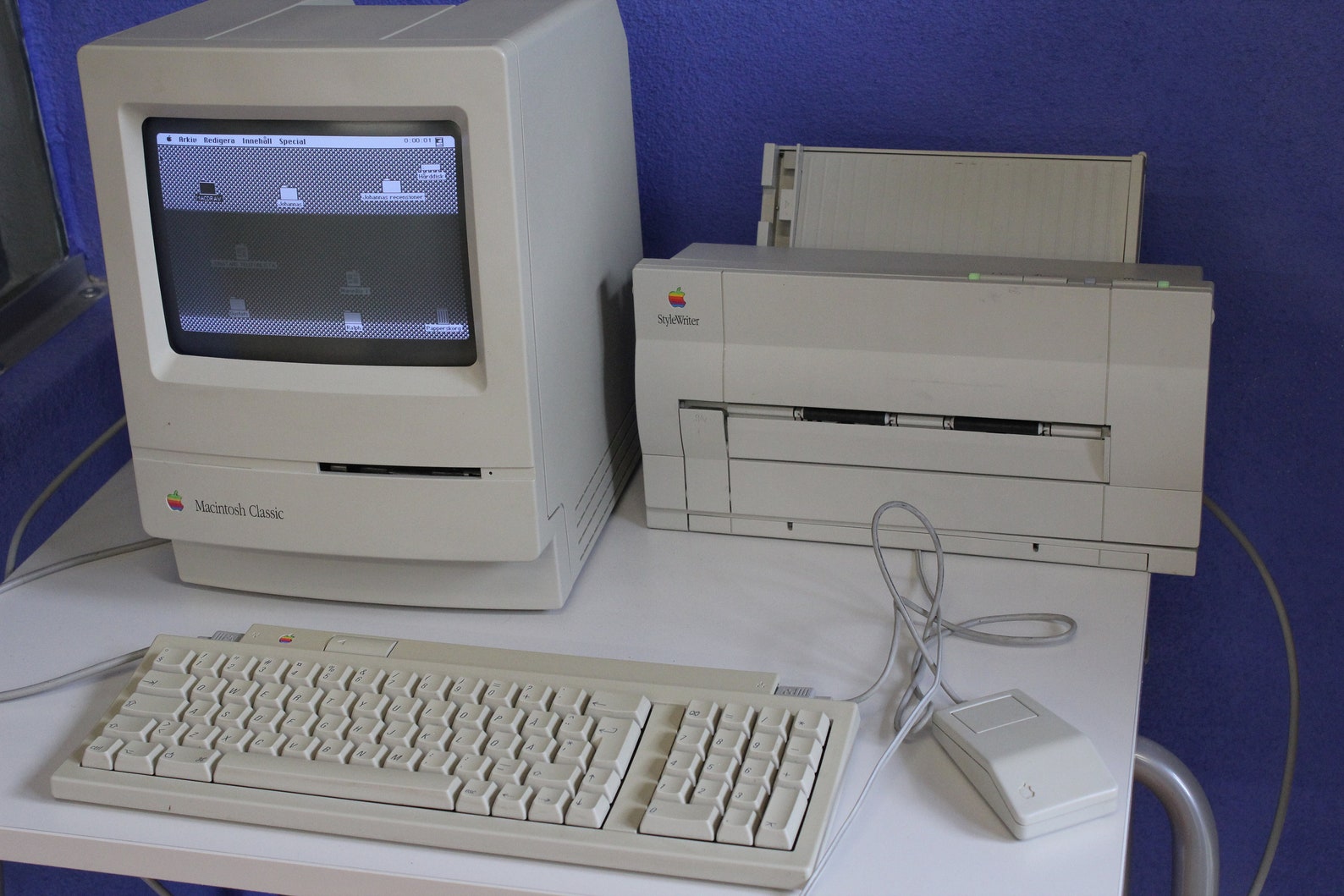
By the time I graduated from high school in 1992, I had handed in many term papers that I had typed on my fancy electric typewriter with citations to a number of library books.  I headed off to college where every student received a brand, spanking new Apple Macintosh Classic II:

Photo courtesy of AntiqueXmas, https://i.etsystatic.com/13928464/r/il/4167ae/2516607797/il_1588xN.2516607797_24wz.jpg

It was portable!  It had a word processor! And a printer!

My senior year of college, I was having some difficulty finding additional texts for my philosophy independent study on democracy and education, so I visited my advisor.  After we discussed the resources I had reviewed and what I was looking for, he queried, “Have you considered looking on the internet?”  I had not.

Sunday, August 30, 2020

Shifting with the Standards - A Look at AASL & ISTE Standards in a COVID World

If we did not already know it was true before COVID, we definitely know it to be true now that we live in a world where information gleaned from the digital, electronic, technological, and online sphere is more important than ever.  Throughout my library studies, I have read a fair bit of lamentation from those who care about books and libraries that the digital world and its content may displace the primacy of printed books.  As Gorman (2015) notes in his preface to the updated Our Enduring Values, the profession of librarianship has “been rocked, socked, shaken, and stirred by all these societal, economic, and technological changes” (p. xii). 

Certainly, as I move forward with my library studies and library work in these COVID times, I have spent a good bit of time thinking about what it means to be a librarian without a library.  Of course, I have a library (and it is brand spanking new and gorgeous and filled with an updated, curated selection of books that I think my students will love), but my students are home learning from my immensely patient and innovative teacher colleagues via Zoom and Google classroom, and they are not visiting my library. 

Thankfully, Dr. Jenna Spiering, in her 2019 article looking at the updated standards from the American Association of School Librarians (AASL) reminds me that “’adolescent literacies’ refers to a shift from recognizing literacy as reading and writing school-sanctioned texts toward an acknowledgment of the myriad ways that young people make sense of text, images, and other media in many different contexts in their everyday and (often) online lives” (p. 46).  It is not so much that the print and digital worlds are in competition but that, increasingly, they are being used in combination.  They are, in a very real sense for our students, merging, and effective school librarians therefore need not only a baseline understanding of the current AASL standards that Spiering (2019) helpfully explicates but also a firm grounding in the standards related to using technology in learning, like those offered by the International Society for Technology in Education (ISTE). 

COVID certainly brings home the importance of librarians keeping things relevant through the use of new technologies.  (I will not say “through technology” because, really, aren’t books a form of technology, just not a particularly new form?)  If students cannot access the print books in our collections (either fully or at all), how do we make sure that they nonetheless access information and “evaluate … [it] for accuracy, purpose, bias, etc.” (Spiering, 2019, p. 47)?  How do we shift from building collections to creating connections (Cromartie & Burns, 2019, p. 81)?

The AASL’s National School Library Standards crosswalkwith ISTE Standards for Students and Educators (2018) helps with navigating the shift that Spiering (2019) references, especially during the current global pandemic.  This helpful chart matches up the AASL’s six shared foundations (inquire, include, collaborate, curate, explore, and engage) with ISTE’s standards across the four AASL domains (think, create, share, and grow) (AASL, 2018). 

Two crossovers stand out to me as examples of how we navigate the shift (Spiering, 2019) in a world where COVID pushes us firmly into the digital context.  We can implement the AASL standards that apply to us as librarians, traditionally in a brick-and-mortar context, through adherence to the ISTE standards in a digital context as well.

1.       Under the shared foundation “Inquire,” the AASL standards for school librarians call for librarians to “design systems that promote flexible and collaborative teaching and learning” (American Library Association, 2018).  The ISTE Standards for Educators call for educators to “foster culture where students take ownership of their learning goals and outcomes in both independent and group settings” (n.d., para. 6a) and to “provide alternative ways for students to demonstrate competency and reflect on their learning using technology” (n.d., para. 7a).  Librarians, as educators, can play an important role simply by making sure that our students have access to the resources they need for successful inquiry.  In an online learning setting, this could include setting up a bitmoji classroom with links to key resources, creating an online request form for students to seek help with finding learning-supportive materials, assisting with efforts to distribute computers or tablets to students, or doing curbside pick-up of requested physical books, if your school and district permit.

2.     Learning online is hard.  No lie.  Even for students we all too often view as “digital natives,” learning online is not the same as learning in a brick and mortar classroom with a physically present teacher!  The Include shared foundation encourages librarians to help students develop an awareness of a global online learning community and to develop and exhibit empathy and tolerance within that community (AASL, 2018).  ISTE standards connect in with a reminder that we can use technology to “build networks and customize their learning environments … use digital tools to connect with learners …” and to “make positive, socially responsible contributions and exhibit empathetic behavior online that build relationships and community” (AASL, 2018).  As librarians, we can prepare digital citizenship lessons that can be shared with students online via school YouTube channels or Google Classrooms.  We can host meet-ups online for our students via Zoom, Google Meet, or WhatsApp so that students can connect and develop and maintain relationships within the school community.

I offer these two examples as food for thought.  The AASL standards and ISTE standards provide many more opportunities for addressing our students’ needs to develop as learners and for navigating the shift from pure textual literacy to a multiplicity of literacies across a variety of texts – traditional print, digital, visual, and more.  I welcome your contributions to this effort!


References

American Association of School Librarians. (2018). National School Library Standards crosswalk with ISTE Standards for Students and Educators [PDF]. AASL.org. https://standards.aasl.org/wp-content/uploads/2018/08/180828-aasl-standards-crosswalk-iste.pdf

American Library Association. (2018).  Shared foundations: Inquire [Infographic].  AASL.org. https://standards.aasl.org/wp-content/uploads/2017/11/SharedFoundations_Inquire_2017.pdf

Gorman, M. (2015). Our enduring values revisited: Librarianship in an ever-changing world. ALA Editions.

International Society for Technology in Education. (n.d.). ISTE standards for educators. ISTE.org. https://www.iste.org/standards/for-educators

Spiering, J. (2019). Engaging adolescent literacies with the standards. Knowledge Quest, 47(5), 44-49.

I'm back...

I’m back!  So many changes over the past two years that I hardly know where to begin! 

You may note that my tagline has a new addition – librarian-in-training.  After almost twenty years of practicing law, I decided to go where my passions led me.  My time-line went something like this:

August 2018 – A confluence of chances led to my taking a part-time job in my daughter’s middle school library, job sharing with two other full-time moms with whom I have volunteered in the elementary library almost a decade.  We decided to put those skills learned as elementary school library volunteers to good use and take over a middle school library program that has been, to put it nicely, underwhelming students and teachers for years!

August 2019 – After a whole lot of conversations with my law partner husband about how we’d make it work on top of still practicing law, working in the library, and, oh yeah, having two kids and a husband, I started working toward my MLIS degree at the University of South Carolina.  The program is 100% online, which is great, because…

March 2020 – Well, you know what March brought!  COVID… shelter-in-place… masks… social distancing… digital learning… remote working.  It’s a new world – one that is simultaneously scary (especially for the elderly and the immune-compromised, which includes some Very. Important. People. in our family) and filled with opportunity.  I’m focusing on the opportunity. 

·        Do I love being home with my kids? Yes, I do! 

·        Are we learning all kinds of things about how computers, cellphones, social media, online ordering, Zoom, and just technology in general can make life, well, better if not great?  Yes, we are!  

·        Are we making the most of every small moment we get to spend masked up, outdoors, and socially distanced with family and a few close friends?  Absolutely!

April 2020 – Packing up and moving an ENTIRE MIDDLE SCHOOL LIBRARY!  Safely!  In the middle of a pandemic!

Summer 2020 – No travel…  (wah-wah…) No camps… (boooooo…) But wait, I’m focusing on the opportunity!  Lots of family time, puzzles, reading, long walks in the neighborhood, Amazon boxes on the porch, maybe-we-can-do-delivery-from-our-favorite-places-again, and online classes!  So. Many. Classes.  (Seriously.  I took four classes during the summer.  Exhausting AND fun!)

August 2020 – Unpacking and setting up an ENTIRE MIDDLE SCHOOL LIBRARY!  Safely!  In the middle of a pandemic!

So… here I am.  Embracing my studies and my new work (as well as my old work… maybe more about that later), learning remotely with my 5th grader and 9th grader alongside (because school has started back for all of us), running a school library remotely in the middle of a pandemic, focusing on the OPPORTUNITY. 

I’ll be trying to post here a little more regularly, reflecting on what I’m learning and where I’m heading.  I look forward to putting my mind-fluff out there again and hearing from whomever takes the time to read!

Tuesday, March 7, 2017

Lies We Tell Ourselves

I know I am going out on a limb speaking on racial issues, and I’m probably going to say something wrong, but I'm going to speak what I think is truth anyway.  Particularly in light of the current political climate, I have been trying to educate myself more on racial issues, to confront this idea that, as Ta’Nehisi Coates would say, I think I am white, to acknowledge my white privilege, and to deal with my own subtle prejudices.  So, please forgive me if I step on toes while I try to work this out in words and force myself to take a good look at myself and the world I live in and, in doing so, make myself a true advocate for racial justice.

I have a favor to ask all my friends who, like me, think we are white: please stop sharing the story of that cute little boy who got his hair cut. On its face, this is a sweet story: boy cuts his hair to look like his best friend's hair and is gleeful that on Monday the teacher won't be able to tell them apart because of their identical haircut. Only here is the twist for us adults: he is white and his friend is black! There is a lesson to learn here! Clearly kids don't see color like we do!  There is hope for the world!

This is an example of one of the lies that we who think we are white like to tell ourselves. We, “enlightened” white people, like to tell ourselves that we can raise children who Don't. See. Color. Racism is thereby eradicated!  Pat yourself on the back because your child is colorblind!  But the story is sweet because we adults know it isn't true. Kids are naive. That kid with his new haircut is going to school, and his teacher will easily tell him and his friend apart because one appears white and the other appears black.  (And do you think this story would get nearly as much airplay if the races were reversed in the story?) 

As I understand it, the Japanese language does not have separate words for blue and green. Leaves, grass, the sky – all the same color.  (I assume they are shades of the same color, but I have no idea, not being or speaking Japanese.)  But we, who speak English, do have separate words, and, as a result, we can't “unsee” leaves and the sky as being different colors  - green and blue.  Similarly with race, maybe there was a time in ancient pre-history when people didn’t have separate words for black and white (though I bet we did or at least for other differences among humans) but even so, we do now, and, culturally, we cannot “unsee” that difference.

While we get an opportunity to pat ourselves on the back when we share this story and congratulate ourselves for being good white people who raise good white children, what we lose is the opportunity for real discussion about race and difference and marginalization and equality. Because the fact is that we all SEE color and notice race (and lots of other differences but let's focus on race here since it is at the heart of the story). And what we want are not necessarily clueless children who “just don't see color” but children who see it but don’t make JUDGMENTS about it, who don’t make ASSUMPTIONS based upon it, who even appreciate and understand that their friends may be treated differently BECAUSE of it.

There was a time when I comfortably thought that I didn’t view my black friends as “black,” just as my friends (who maybe happened to be black).  But when I started examining my white privilege and the subtle stereotypes and prejudices I had absorbed in my Southern upbringing, I realized that that was BS and not only untrue but unfair to my friends because that view ignores and diminishes their experiences that have arisen out of being viewed as black.  These are experiences that make us different (that maybe make us seek out friendship with each other because of appreciation of our differences, sure), but they are experiences that simply are not the same, even if we live in the same place at the same time and do the same things.  True friendship doesn’t allow us to ignore our differences and focus on liking each other on some shallow level.  It forces us to acknowledge our differences and learn from them and TALK ABOUT THEM and come up with ways together to keep them from having us or our children lead drastically different lives with drastically different opportunities and risks because of those differences. 


We who identify as white and benefit from the privileges that accrue to that status cannot hope to raise colorblind children because that denies the world in which we live. If we want to do right by our fellow humans, we must hope to raise children who see color and all that it means in this world and try to see beyond it to a real person with a real background and experiences and who will strive to make sure those differences don't mean different treatment.  It’s great to have children who think that it is totally cool to have a haircut (or a shirt or a common interest) with a friend of a different background, but it really isn’t ok to have children who don’t see and understand the differences.  Because the reality is that children who are viewed as black have different experiences than children who are viewed as white – even if they have the same haircuts - and we do a disservice to ALL of our children when we encourage them not to see those differences.  We do a disservice to ourselves and to our black friends when we lie to ourselves that colorblindness is possible or, more importantly, desirable.

Wednesday, July 29, 2015

The Allowance

Allowance.  How much, for what, when?  This topic regularly comes up with parents.  There are a variety of approaches to allowances, and every family will have to decide what fits with their values, parenting style, and child’s (or children’s) personalities. 

When our daughter was going into first grade, we gave this issue a lot of thought.  I read a couple of articles and books, including the fantastic Kids, Money, & Values by Patricia Schiff Estess, which I recommend finding at your local library.  Here is where my husband and I finally shook out:
  1. We decided that, in our household, an allowance would be purely a money management training tool.  It is not a carrot or a stick.  We do not require that our child (currently only our daughter gets an allowance, though our son’s time is coming, in about a year) do household chores to earn her allowance.  Nor do we withhold allowance as a punishment.  Why?  Ultimately, our view is that no one pays us to do the little chores that keep the house running.  Cleaning up after yourself, gathering trash, doing laundry, unloading and reloading the dishwasher, etc. – these are all just the price of admission for living in our home.  No one is going to get paid to do these things.  Not us.  Not the kids.  And if we give ourselves permission to remove the allowance as punishment then we’re depriving our child of the opportunity to do what we have established as the primary purpose of giving her an allowance:  learning to manage money.  She can’t manage what she doesn’t have.
  2. That does not mean that the allowance does not come with strings.  Our daughter is now expected to make the vast majority of her discretionary purchases.  She knows that if we are on vacation and she just has to have that adorable stuffed cat to add to her collection of a million and one stuffed animals then her Daddy and I will ask, “Did you bring your money?”  We may buy her brother the stuffed cat HE wants, but he’s still living on Mama & Daddy’s discretionary dime.  If our daughter wants something non-necessary, she has to budget for it.  No money = no purchase.  Why?  We want her to distinguish between what she needs and what she wants.  Food, basic clothing, shelter, basic school supplies – those are things we provide because she needs them.  The one-hundredth stuffed cat?  That’s something she wants.
  3. That also doesn’t mean that we would never pay our kids to do chores.  Why?  Well, we pay someone to mow the lawn and wash the car, for example.  If one of our kids shows an interest in something that we already pay another person to do – well, we’d strongly consider just paying our child to do it.  We didn’t have kids to gain free labor, so it seems fair to pay them to do something we’d be paying someone else to do.

  4. Barring a truly exceptional circumstance, which has occurred only once, we don’t advance allowance.  Why?  There’s really no money management goal behind this one.  It’s simply because we don’t want to have to remember from week to week that we’ve already forked over the allowance she thinks is due. 
  5. That said, we will occasionally loan money if she hasn’t brought her purse.  Why?  Well, her Daddy and I have credit cards.  We do this all the time.  Understanding credit is part of managing money.  She pays us back as soon as we walk into the house.  No long-term memory required.  And we don’t change interest… yet.

  6. We do have her allocate her money among three permanent categories and one temporary category, but we do not dictate HOW she allocates her money.  Why?  Again, this is a money management tool.  We think the best way to learn is by trial and error.  She won’t learn if we don’t give her some freedom to make mistakes with her allocations when it really doesn’t matter (or to feel really good when she thinks things have worked out perfectly).  The three permanent categories are spending, savings, and donation.  Typically, she puts her weekly allowance in a special jar, where she may also stick any change she finds or any money she gets as a gift from a friend or relative, then every few weeks she pulls out the money and divvies it up among her wallet and a couple of specially labeled Mason jars.  The temporary category was her idea:  Christmas savings.  Turns out the kid has a generous spirit and LOVES buying her gifts to give family at Christmas.  She’s pretty good at it, too.

  7. HOWEVER, remember the title of that book?  We also want to impart some VALUES with our money management training, so we match savings and donation but not spending.  Why?  Matching indicates the relative importance we put on saving for the future and supporting charitable causes.  She decides how much to save (but boy does she love to double it, and she is VERY proud of her bank balance) and how much to donate as well as to which charity.  We make the match.

  8. Finally, we have no set schedule for increasing the allowance amount.  Our daughter was going into first grade when we started this training experiment, and she is now going into fourth grade.  She still gets $5 a week.  She hasn’t asked for a raise, and, for the time being, the amount seems to meet her limited discretionary needs.  If she asks for a raise and is willing to explain why she thinks she needs it or if her Daddy and I just decide independently that her circumstances warrant it absent a request from her, we’ll do an increase.  (And I am expecting a request in a year, when her brother starts getting an allowance.  Why?  Because she’s older and will think she deserves more.)
This system has worked for us.  Our daughter understands that money isn’t unlimited, that it is rewarding to see your bank balance grow and to know you have savings, that supporting a worthy charity makes you feel good about spending your money, and that spending on yourself often pales in comparison to buying something that puts a smile on the face of someone you love.  And as she gets older and starts actually earning her own money, we’ll add additional money management training tools like a checking account and credit card.

I’d love to read comments  from others about the system you use, why, and how it works for you.